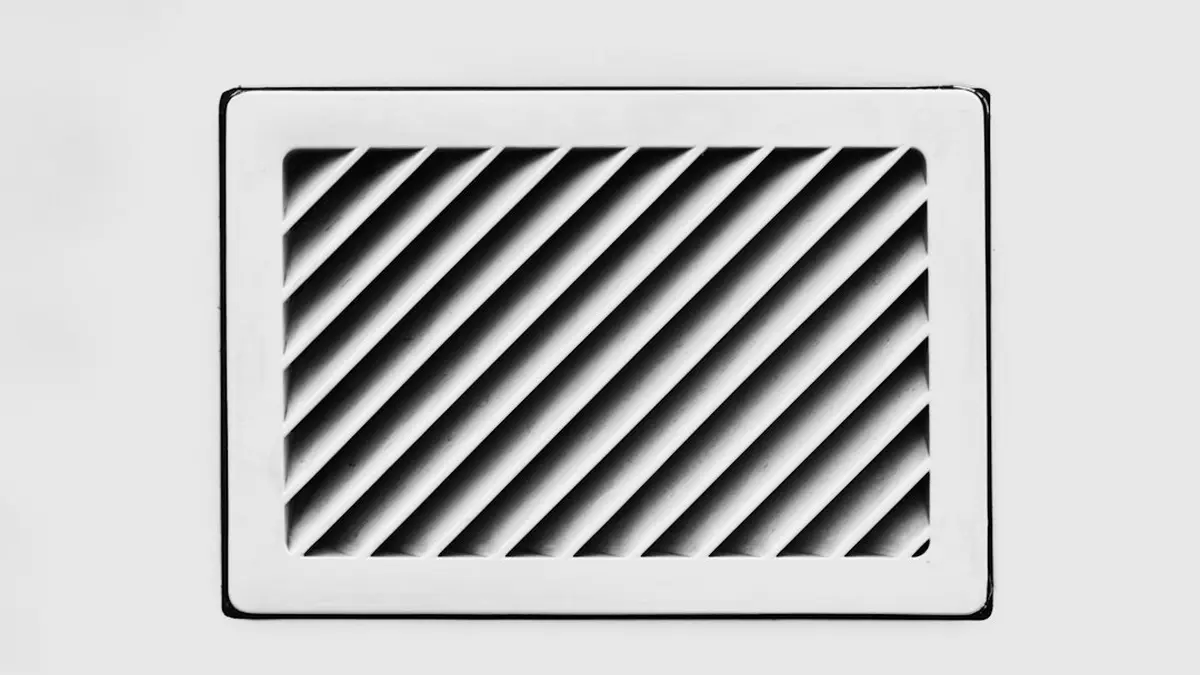
Replace a bathroom fan if it grinds, smells like it is burning, is more than about 10 years old, or runs through every shower and still leaves the mirror fogged and mold spreading. Fix it instead if it only rattles, is under 8 years old and the motor still spins freely.
That difference decides whether you spend $10 to $40 on a repair or a few hundred dollars on a new unit. Settle it before you call anyone. You can do it in about 15 minutes by looking and listening.
Four signs the fan is finished
Grinding, or humming with no movement. Loud grinding usually means worn motor bearings. A hum with blades that do not turn means the motor has seized, according to an electrician's troubleshooting guide at HomeInVibe. Either one points to replacement, because you cannot fix it with cleaning. Rattling is different. It usually comes from a loose part or debris in the housing, which is an easy fix.
Age past 10 years. Sources put the typical lifespan at 10 to 15 years. Select Home Warranty is more conservative and says about 10 years with proper maintenance. A fan past 15 should be replaced even if it still runs. A fan between 10 and 15 that shows any of the other signs here is not worth repairing.
Moisture the fan does not clear. Watch for peeling or bubbling paint, soft drywall near the ceiling, a musty smell that comes back after cleaning, water dripping from the grille, and mold above the shower or in ceiling corners. This sign is urgent because mold can establish on a wet surface within 24 to 48 hours.
A burning smell. See the warning below. It is the one sign that changes what you do today.
All of this matters for code as well as comfort. Under ASHRAE 62.2 and IRC Section M1507, a bathroom fan used intermittently must move at least 50 CFM, as summarized by the Building America Solution Center. Worn bearings, dirty blades and collapsed ducting can push real output below that floor, even if the fan passed inspection when it was new.
The mirror test
Take a normal hot shower with the fan running, then time how long the mirror takes to clear after you turn off the water.
- Clear within 10 minutes: the fan is moving enough air.
- Still fogged at 15 to 20 minutes or more: airflow is inadequate.
Give the test that long because water keeps evaporating for 15 to 20 minutes after a shower ends. For the same reason, the Home Ventilating Institute recommends running the fan at least 20 minutes after each use.
The test has one limit. It tells you airflow is low. It does not tell you why, and several of the causes have nothing to do with the motor.
When a weak fan isn't a dead one
| What you notice | Likely cause | What fixes it |
|---|---|---|
| Weak airflow, fan sounds normal | Dust buildup on the grille or blades | Cleaning. Select Home Warranty recommends cleaning the housing and blades twice a year |
| Weak airflow with the door shut | No gap under the door for replacement air to enter | At least 3/4 inch of clearance above the finished floor, per HVI |
| Mold in the attic, on roof sheathing or framing | Fan venting into the attic instead of outdoors | A duct run to the exterior. A new fan alone will not fix it |
| Fog and humidity since the day it was installed | Fan was too small for the room | A larger fan sized at 1 CFM per square foot, 50 CFM minimum |
Two of these causes need explaining. Attic venting is common in fans installed before 1990, and in some newer ones, according to EnviroPro360. The mold it causes on the roof sheathing often gets blamed on a roof leak.
An undersized fan is not failing, but it still needs replacing, with a bigger one. HVI's sizing rule is 1 CFM per square foot for bathrooms up to 100 square feet, with 50 CFM as the minimum. By that rule a 7 by 10 foot bathroom needs 70 CFM. Bathrooms over 100 square feet are sized by fixture instead: 50 CFM each for a toilet, shower and tub, and 100 CFM for a jetted tub.
Fix it or replace it
Repair it if the fan is under 8 years old and the motor spins freely after oiling. HomeInVibe puts that repair at $10 to $40. It also says 60% of bathroom fan problems can be fixed yourself in under an hour. That figure comes from one electrician's guide and has not been checked against other data.
Replace it if any of these apply:
- The fan is over 10 years old.
- The motor is seized or burnt.
- The grinding comes back after you clean it.
- It is too small for the room.
On cost, HomeGuide's 2026 figures put swapping an existing fan at $150 to $550. Fixr's guide, last updated February 2025, gives an average of $200. Prices rise when the vent path has to be new, which is the likely case if your current fan dumps air into the attic. HomeGuide prices that kind of job at $250 to $950. Our full guide to what a bathroom exhaust fan replacement costs breaks these figures down by fan type.
When you get quotes, ask each contractor three things:
- Does the duct end outdoors? You want it to vent outside, not into the attic.
- Is the new fan HVI-certified? Uncertified fans often deliver less airflow than their labels claim.
- How loud is it? The code ceiling for an intermittent fan is 3 sones. HVI recommends 1 sone, about as loud as a refrigerator, as the practical maximum for comfort. Older builder-grade fans commonly run at about 4 sones.
Comments
No comments yet. Be the first to comment!
Leave a Comment