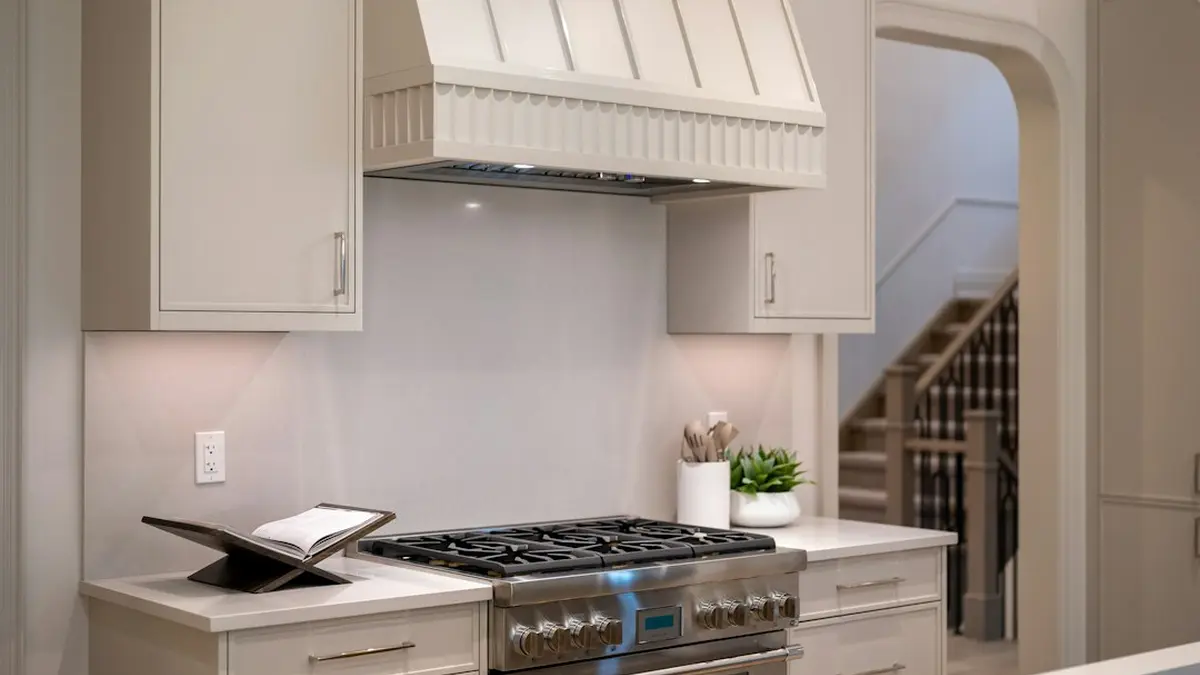
Yes, if the job is a like-for-like swap: the new hood goes where the old one was, connects to the duct that is already there, and plugs or wires into the outlet or junction box already in place. A new electrical circuit, a new duct path through an exterior wall or roof, or a hood rated above 400 CFM that can trigger a makeup air requirement is work for licensed pros, and it usually needs a permit.
The question matters because of the labor you can save. In Angi's 2026 cost data, a basic install using existing ducting and electrical runs $200 to $400 in labor. Angi puts the saving from replacing a ductless hood yourself at $200 to $500. Those savings disappear quickly if the job fails inspection or has to be redone.
The three things that move a job out of DIY range
Whether you can do the work yourself depends on what the job adds to the house, not on how heavy the hood is or how handy you are. Three additions change the answer.
A new circuit or new wiring. If no outlet or junction box sits behind the hood, someone has to run power to it. HomeGuide's 2026 guide lists electricians at $50 to $130 an hour and a new outlet at $150 to $350. HVAC Database puts 120V and 240V circuit work on its list of professional-only tasks. New electrical wiring is also one of the standard triggers for a range hood permit, which runs $100 to $230 in most cities, according to Angi and HomeGuide.
A new hole to the outside. Under the IRC text on up.codes, a ducted hood has to discharge outdoors through an airtight, smooth-interior metal duct with a back-draft damper. The duct cannot be shared with a bath fan or dryer, and it cannot end in an attic or crawl space. The IRC 2024 summaries set a minimum of 6 inches round or 3.25 by 10 inches rectangular, and they prohibit flexible and foil duct. Cutting through a wall or roof to meet those rules is permit work, and Angi prices the labor at $400 to $800 once new ductwork is involved.
More than 400 CFM. The IRC requires makeup air for hoods that can exhaust more than 400 cubic feet per minute. The system has to supply roughly the same airflow, close when it is not in use, and switch on automatically with the hood. That interlock is wiring, and Victory Range Hoods says a licensed electrician should do it, because faulty interlock wiring can void the hood's UL listing. HVAC Database estimates makeup air adds $1,000 to $3,000 to a job.
Three kitchens, three answers
A worn-out 30-inch under-cabinet hood, same duct, same outlet. This is the DIY case. HomeGuide puts a replacement at $300 to $850 total, unit and labor included, with a national average of about $575. If you do the swap yourself, you keep the $200 to $400 that Angi lists for a basic install. Size the new hood at roughly 100 CFM per 10 inches of cooktop width, which HVAC Database uses as a rule of thumb. That puts a 30-inch range at a 300 CFM minimum, well under the 400 CFM line.
A kitchen with no hood at all. HomeGuide prices a first-time installation, including a new outlet and ductwork, at $650 to $2,100. The work includes a new circuit, a wall or roof penetration, a permit, and often $300 to $500 of drywall repair. Most of the extra cost is the new duct path. None of this is DIY work.
An upgrade to a pro-style gas range. HVAC Database says these ranges call for 600 to 1,200 CFM, which is well past 400. In a house with an older atmospheric gas water heater, makeup air is required under any reading of the code. Victory prices passive dampers at $800 to $1,500 installed and powered systems at $3,000 to $5,000. In cold climates, the incoming air may also need an inline heater.
Two loopholes that aren't
| What it looks like | What it actually is |
|---|---|
| A ductless hood skips the duct rules, so it is always DIY | The IRC on up.codes allows listed ductless units installed to the maker's instructions. Jaspector's reading of the 2024 code bars recirculating hoods in new construction. Ductless avoids the duct work, but it does not avoid new wiring if no outlet exists. |
| The box says 390 CFM, so makeup air doesn't apply | Hauslane reports that inspectors recognize only laboratory-tested CFM, not the 'equivalent CFM' some brands advertise. Check the lab figure before you buy. |
Before you pick up a drill
Answer four questions first. Is there already a duct to the outside, and is it rigid metal? Is there an outlet or junction box behind the hood? Is the new hood's laboratory CFM at or under 400? Does your city add its own makeup air rule? If you can answer yes, yes, yes and no, the swap is within reach of a careful homeowner. Any other answer means hiring a pro.
Doing the more complex work yourself carries specific costs. A failed inspection means paying a pro to redo the work and then reinspecting. Angi warns that mis-wired electrical connections violate safety codes and can void warranties and insurance. A flexible or leaky duct collects grease in its corrugations, which Jaspector flags as a fire risk, and that grease can end up inside the cabinet the duct runs through.
The sources here do not set out where each state or city lets homeowners pull their own electrical permits. That varies by jurisdiction, and ProLine notes that local codes override the model codes. Call your building department before you do any wiring.
If your answers point to a pro, get more than one bid and compare them line by line. Look for the hood, the duct, the electrical work, the permit and any makeup air listed separately, so you can see what a quote should include and spot what has been left out.
Comments
No comments yet. Be the first to comment!
Leave a Comment